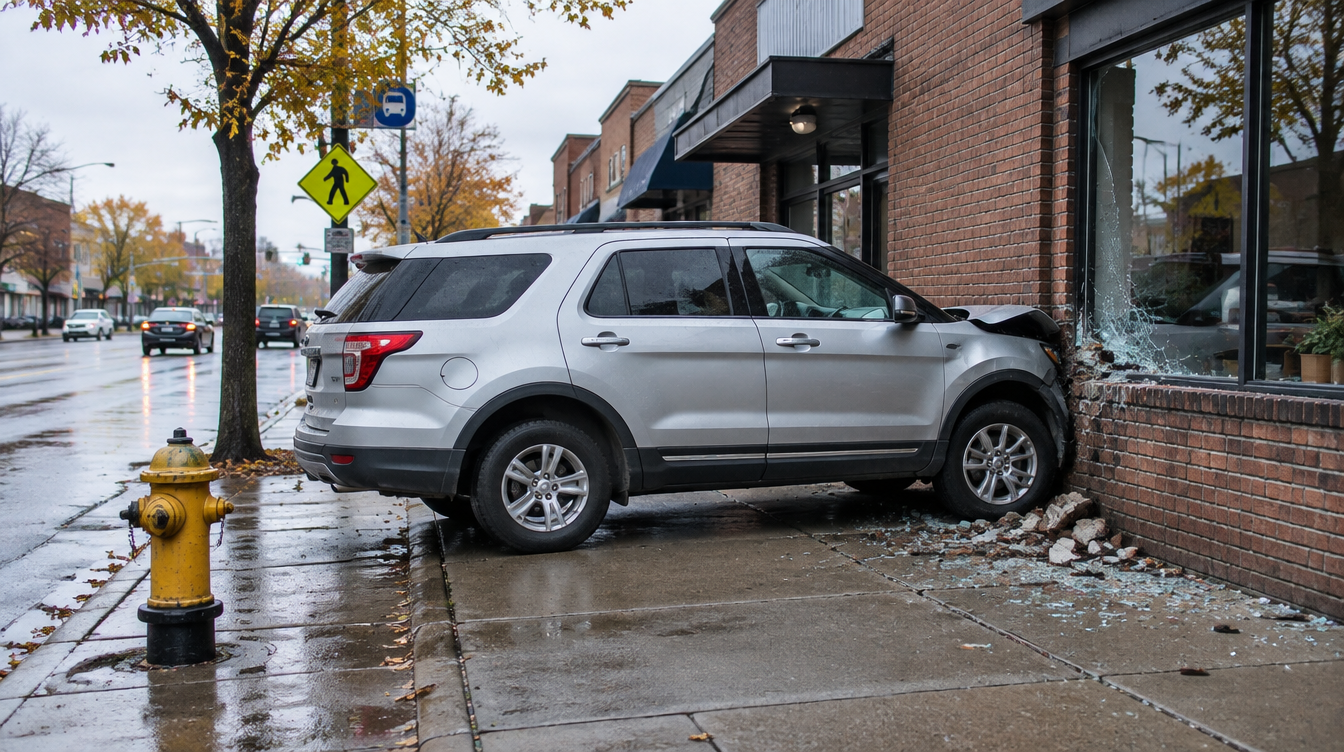
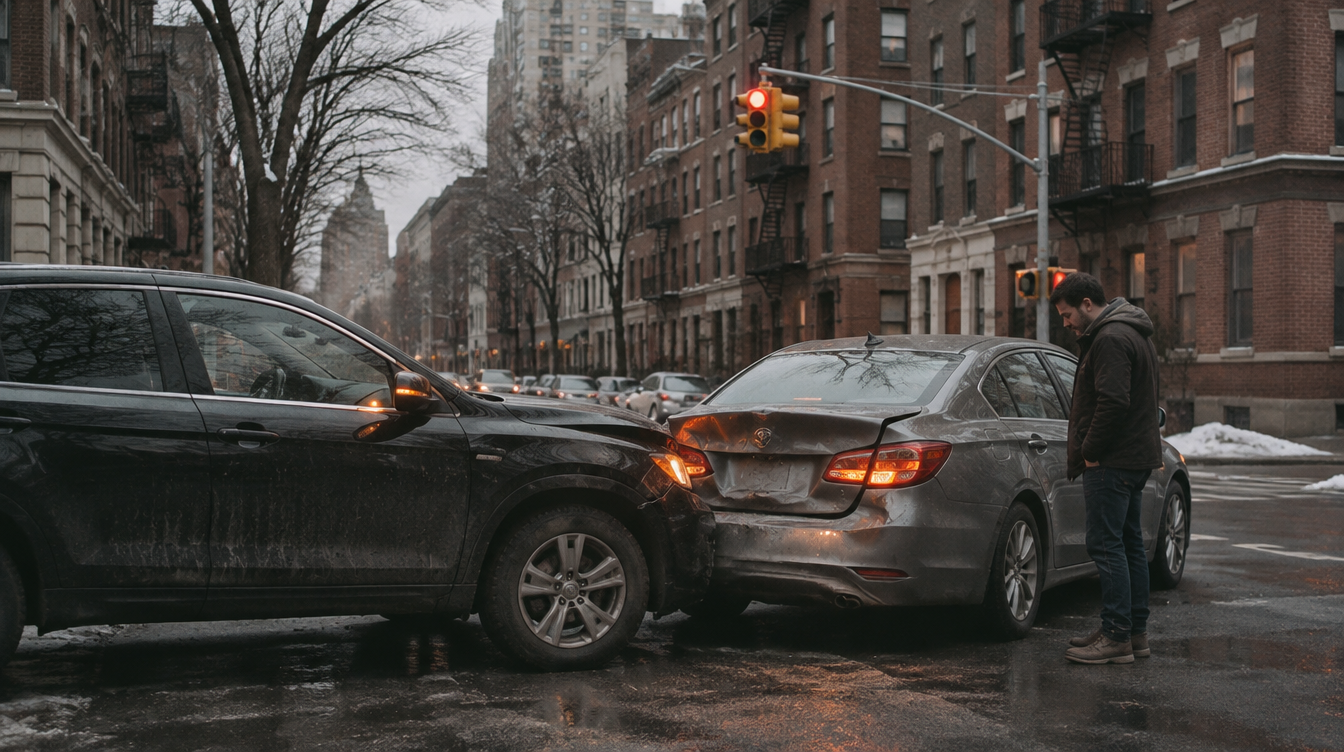
In New York, a rear-end collision with a stopped or slowing vehicle creates a presumption that the rear driver was negligent. Courts treat it as a prima facie case of liability, and the rear driver must come forward with a non-negligent explanation for the crash or lose on that issue.
That makes rear-end cases some of the strongest liability cases in New York. But a clear liability case is only half the claim. The other half, proving the injury, is where most rear-end disputes are fought. Here is how both halves work.
Key Takeaways
- Hitting a stopped or stopping vehicle from behind is prima facie evidence of the rear driver’s negligence under New York case law.
- Vehicle and Traffic Law §1129(a) requires drivers to keep a reasonable and prudent distance from the vehicle ahead.
- A front car’s “sudden stop” usually is not enough, on its own, to excuse the rear driver.
- Because liability is often clear, rear-end victims may win summary judgment on fault before trial.
- To recover for pain and suffering, you still must prove a “serious injury” under Insurance Law §5102(d).
Why is the rear driver presumed at fault?
Every driver must keep a safe following distance and be ready to stop for traffic ahead (VTL §1129(a)). If you were stopped at a light, slowing for traffic, or stopped in a line of cars, a driver who hits you from behind is presumed to have been following too closely, speeding, or not paying attention.
The rear driver can try to rebut that presumption, but the explanation has to be real: a sudden mechanical failure that could not have been anticipated, for example, or being pushed forward by another car.
What excuses do insurers try?
- “The car in front stopped short.” New York courts have repeatedly held that a sudden stop in traffic, standing alone, is not a non-negligent explanation. Drivers are expected to anticipate stops.
- “The road was wet.” Weather is a reason to leave more space, not an excuse for leaving less.
- “My brakes failed.” This can work only if the failure was sudden and the driver had no reason to know about it. Maintenance records matter.
- “The other car cut in front of me.” An abrupt lane change by the front car can shift fault, which is why witness statements and video are important.
These arguments are part of a broader set of tactics we describe in how the insurance defense playbook works.
Who is liable in a chain-reaction crash?
In a multi-car rear-end collision, the last car in the chain is usually presumed responsible for pushing the others forward. A driver in the middle who had stopped safely and was pushed into the car ahead is generally not liable for that second impact. Sorting out the order of impacts is where police reports, damage photos, and dashcam footage become decisive.
Do I still need to prove a serious injury?
Yes. Even when fault is clear, New York’s no-fault law means you can sue for pain and suffering only if your injury meets one of the categories in Insurance Law §5102(d). Common rear-end injuries include neck and back sprains, herniated discs, concussions, and shoulder tears.
Insurers often argue that a “low-impact” crash with little property damage could not have caused a serious injury. Medical evidence, not bumper damage, decides that question. Imaging, a treating doctor’s findings, and consistent treatment from the start are what count. We explain the threshold in New York no-fault and when you can sue, and why symptoms can appear later in why your injuries felt fine right after your accident.
What should you do after being rear-ended?
- Call the police and make sure the report describes the rear impact.
- Photograph both vehicles, the traffic signal, and the road surface.
- Get the other driver’s license, registration, and insurance information.
- Get examined the same day or the next, even if you feel only stiff.
- File for no-fault benefits within 30 days.
Rear-Ended in New York?
A clear liability case still has to be built to prove the full value of your injury. The NYC car accident lawyers at Keith D. Silverstein & Associates have recovered millions for injured New Yorkers and know how to answer the “low-impact” defense. Call 212-385-1444 for a free consultation.
Keith D. Silverstein · Admitted to the New York Bar, 1987 · Read Keith’s bio
This article is general information about New York law, not legal advice, and does not create an attorney-client relationship. Every case is different. Attorney Advertising.