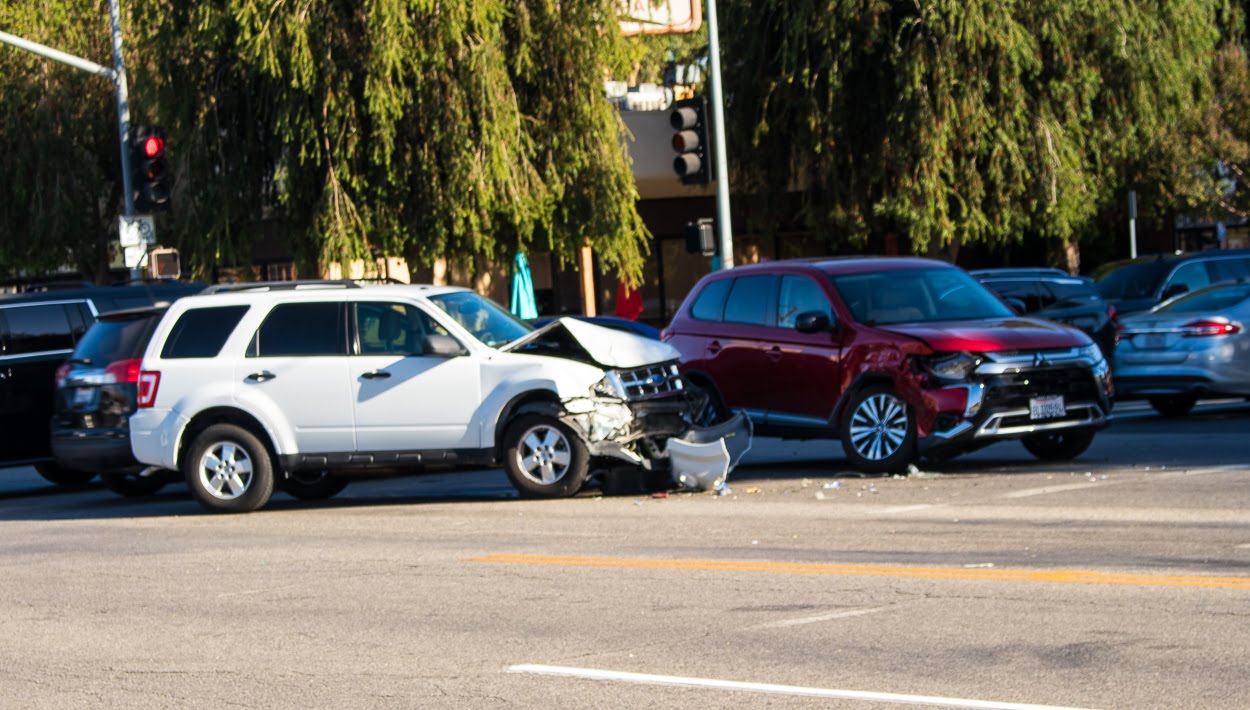

When the driver who hit you has no insurance, or drives off before anyone gets a plate number, you can still recover in New York. The money usually comes from your own policy: no-fault pays your medical bills and lost wages first, and the uninsured motorist (UM) coverage that every New York auto policy must carry steps in for the at-fault driver.
If you have no car insurance of your own, a state-created fund called MVAIC may pay instead. Each path has short deadlines that are easy to miss. Here is where the money comes from and what you need to do to protect your claim.
Key Takeaways
- Your own no-fault coverage still pays first, up to $50,000 per person, even if the other driver was uninsured or fled.
- Every New York auto policy includes uninsured motorist coverage of at least $25,000/$50,000 under Insurance Law §3420(f)(1).
- Optional SUM coverage (§3420(f)(2)) can pay much more when the at-fault driver has no insurance or too little.
- If no policy applies to you, MVAIC (Insurance Law Article 52) may cover the claim, but you generally must file within 90 days.
- A hit-and-run must be reported to the police, generally within 24 hours, and most hit-and-run claims require physical contact with the other vehicle.
Does no-fault still pay after a hit-and-run?
Yes. No-fault pays regardless of fault, so it pays whether or not the other driver is ever found. If you were driving or riding in an insured car, that car’s policy usually pays. If you were a pedestrian or cyclist, your own auto policy, or the policy of a relative you live with, typically applies. The same 30-day deadline to file a no-fault application applies.
What no-fault does not pay is pain and suffering. For that, you need a claim against the at-fault driver’s coverage, and when that driver is uninsured or unknown, UM coverage takes their place.
How does uninsured motorist coverage work?
Uninsured motorist coverage lets you make a claim against your own insurer as if it were the at-fault driver’s insurer. New York requires it on every auto policy at minimum limits of $25,000 per person and $50,000 per accident (Insurance Law §3420(f)(1)). A hit-and-run vehicle is generally treated as uninsured if it made physical contact with you or your vehicle.
Two points surprise people. First, your own insurer will defend against the claim the same way a stranger’s would. Second, the serious injury threshold still applies, so you must prove a qualifying injury to recover for pain and suffering.
What is SUM coverage, and why does it matter?
Supplementary uninsured/underinsured motorist coverage (SUM) is optional coverage under Insurance Law §3420(f)(2). It raises your UM protection, often to match your own liability limits, and it also applies when the at-fault driver has insurance but not enough to cover a serious injury.
With New York’s minimum liability limits at $25,000 per person, SUM is often the largest source of recovery in a serious crash. Check your declarations page. SUM policies require prompt written notice to your insurer, and many SUM disputes are decided in arbitration rather than in court.
What if you don’t have car insurance?
The Motor Vehicle Accident Indemnification Corporation (MVAIC) was created under Insurance Law Article 52 to protect New York residents hurt by uninsured or unidentified drivers who have no other coverage available. It is common for pedestrians and cyclists in NYC who do not own a car.
MVAIC’s rules are strict. You generally must file a notice of intention to make a claim within 90 days of the accident (Insurance Law §5208), and in a hit-and-run you must show the accident was reported to the police within 24 hours or as soon as reasonably possible. Missing these steps can end the claim. Our NYC pedestrian accident lawyers handle these filings regularly.
What should you do right after a hit-and-run?
- Call 911 and make sure a police report is filed. Ask for the report number.
- Write down everything you remember about the vehicle: color, make, partial plate, direction of travel.
- Find cameras. Businesses, buses, and doorbells often capture the car, but footage is commonly overwritten within days.
- Get examined right away, even if you feel fine. We explain why in why your injuries felt fine after your accident.
- Notify your insurer in writing and file your no-fault application within 30 days.
Hit by an Uninsured or Hit-and-Run Driver?
A missing or uninsured driver does not have to mean a missing recovery, but the deadlines start immediately. The NYC car accident lawyers at Keith D. Silverstein & Associates have recovered millions for injured New Yorkers and know how to pursue UM, SUM, and MVAIC claims. Call 212-385-1444 for a free consultation.
Keith D. Silverstein · Admitted to the New York Bar, 1987 · Read Keith’s bio
Published October 28, 2026 · Last reviewed October 2026
This article is general information about New York law, not legal advice, and does not create an attorney-client relationship. Every case is different. Attorney Advertising.