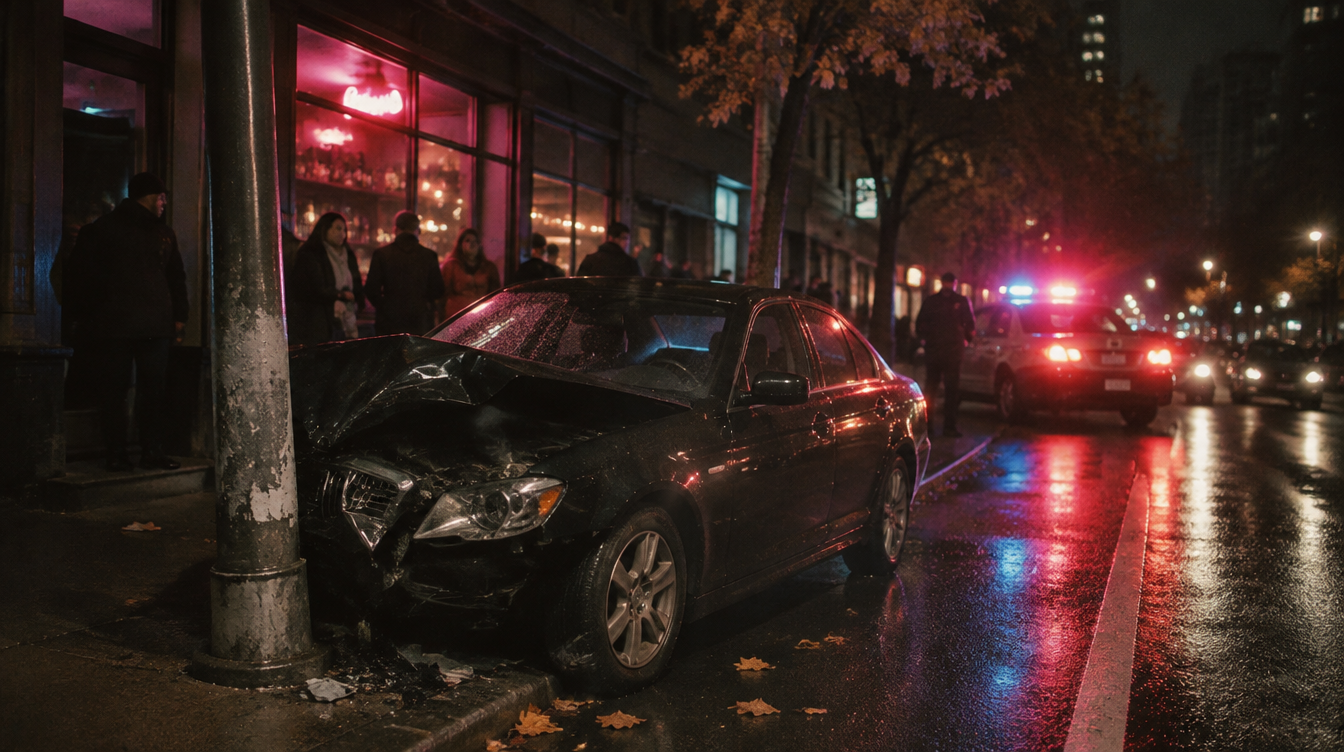
If a drunk driver injures you in New York, you can sue the driver. You may also have a claim against the bar, restaurant, or store that sold them alcohol. Under New York’s Dram Shop Act, General Obligations Law §11-101, a business that unlawfully sells alcohol to a visibly intoxicated person can be held liable for the injuries that person causes.
With the holiday season, and some of the busiest drinking nights of the year, approaching, here is how drunk driving injury claims work in New York and why the dram shop claim is often the difference between a limited recovery and a full one.
Key Takeaways
- A drunk driver can be sued for your injuries whether or not the criminal case has finished.
- Under the Dram Shop Act (GOL §11-101), a business that unlawfully sold alcohol to a visibly intoxicated person can be liable to people that person injured.
- Under GOL §11-100, anyone, including a social host, who knowingly provides alcohol to a person under 21 can be liable for injuries that person causes.
- New York generally does not hold social hosts liable for serving adult guests.
- Evidence such as receipts, bar tabs, and video disappears fast, so dram shop investigations must start early.
Why does a dram shop claim matter?
Many drivers carry only New York’s minimum liability coverage of $25,000 per person. In a serious crash, that is not enough to cover surgery, lost income, or a permanent injury. A bar or restaurant typically carries its own commercial insurance, which may provide another source of recovery. Your own SUM coverage can also help, as we explain in uninsured and underinsured driver claims.
What must you prove under the Dram Shop Act?
The key requirement is an unlawful sale. New York’s Alcoholic Beverage Control Law §65 prohibits selling alcohol to anyone who is visibly intoxicated or under 21. To succeed, you generally must show:
- The business sold or served alcohol to the driver
- The driver was visibly intoxicated at the time, or under 21
- The sale contributed to the intoxication that led to the crash
Visible intoxication is proven with witness testimony about slurred speech, stumbling, or loud behavior, the number of drinks on the receipt, the time spent at the bar, and video from inside the establishment. A high blood alcohol level alone may not be enough, but combined with other evidence it can be persuasive.
What about house parties and underage drinkers?
New York does not generally impose liability on social hosts who serve alcohol to adult guests. The major exception is underage drinking. Under GOL §11-100, anyone who knowingly causes intoxication by furnishing alcohol to a person under 21, or assisting in getting it, can be liable to people that person injures. That can include a parent who hosts a party for teenagers.
Can you recover punitive damages?
In some cases. Driving while intoxicated, a violation of Vehicle and Traffic Law §1192, can be the kind of reckless conduct that supports punitive damages, which are meant to punish rather than compensate. Whether they are available depends on the facts, including how impaired the driver was and how they were driving. A DWI conviction can also help prove fault in the civil case.
Do I still need a serious injury?
For a claim against the drunk driver for pain and suffering, generally yes. New York’s no-fault law applies to drunk driving crashes like any other car accident. See New York no-fault explained.
What should you do after a crash with a drunk driver?
- Call 911 and tell officers if you smelled alcohol or saw signs of impairment.
- Get the police report and any arrest or charge information.
- Note where the driver came from, if they said or if witnesses know. That is the first lead for a dram shop claim.
- Act quickly. Bars routinely overwrite video, and staff turnover makes witnesses harder to find.
- Get medical care and file for no-fault within 30 days.
Hit by a Drunk Driver in New York?
Holding every responsible party accountable, including the business that kept serving, can make a major difference in your recovery. The NYC drunk driving accident lawyers at Keith D. Silverstein & Associates have recovered millions for injured New Yorkers and know how to investigate a dram shop claim. Call 212-385-1444 for a free consultation.
Keith D. Silverstein · Admitted to the New York Bar, 1987 · Read Keith’s bio
This article is general information about New York law, not legal advice, and does not create an attorney-client relationship. Every case is different. Attorney Advertising.