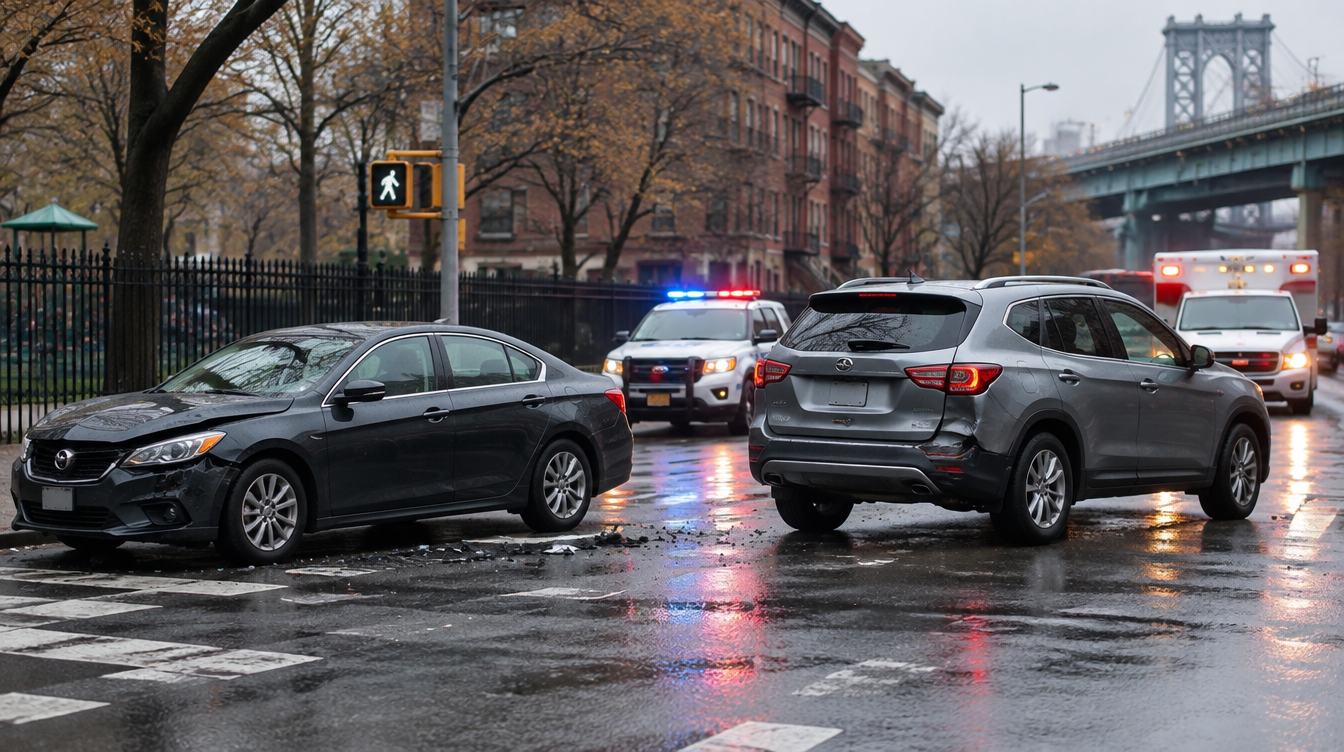
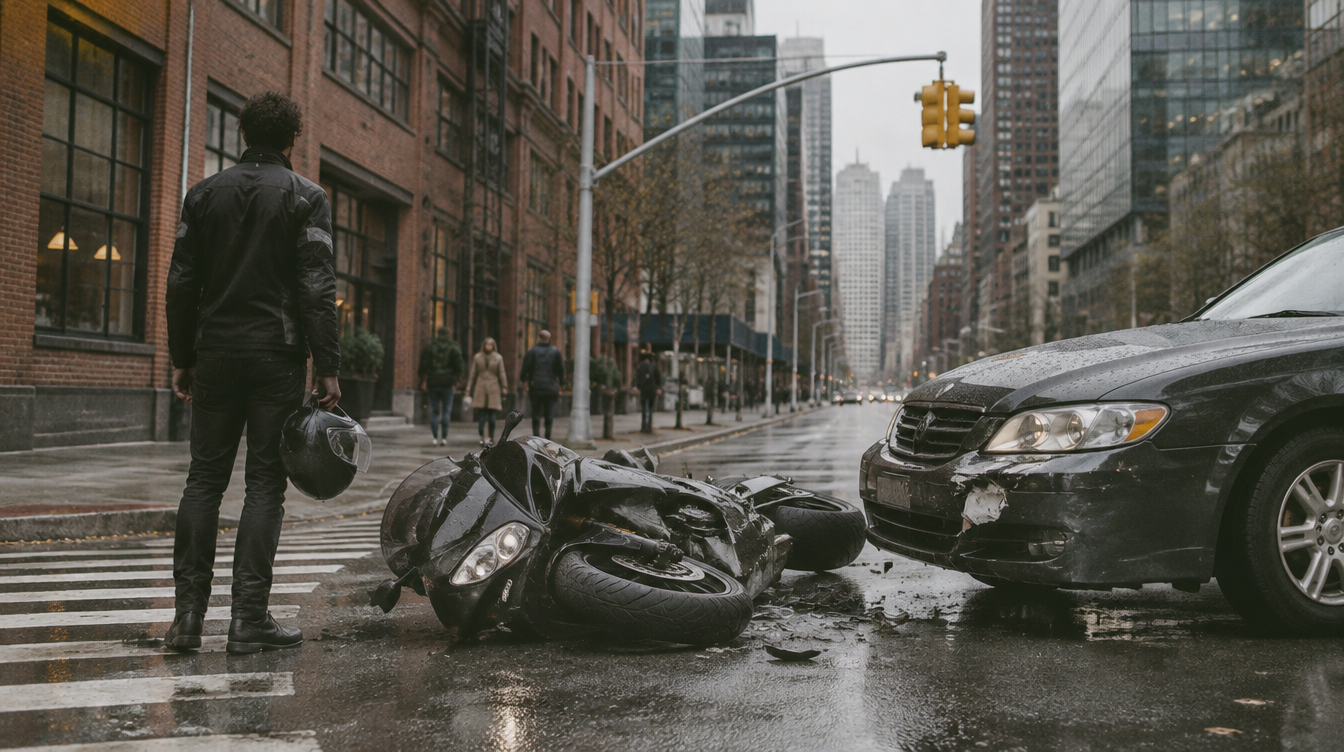
If you ride a motorcycle in New York, the no-fault system that protects every other driver does not protect you. Under Insurance Law §5102(f), a motorcycle is not a “motor vehicle” for no-fault purposes, so there is no Personal Injury Protection to pay your medical bills or lost wages after a crash, no matter who caused it.
That gap sounds like bad news, and in the first weeks after a crash it is. But it comes with a trade-off most riders never hear about: because you are outside the no-fault system, the serious injury threshold that blocks so many car-crash lawsuits generally does not stand in your way. Here is how a motorcycle claim works in New York and what you can recover.
Key Takeaways
- Motorcycles are excluded from New York no-fault under Insurance Law §5102(f). Riders do not receive the $50,000 in no-fault benefits that car occupants get.
- Your medical bills are typically paid first by your health insurance or by optional medical payments coverage on your motorcycle policy.
- Because riders are not “covered persons,” the §5102(d) serious injury threshold generally does not apply when you sue the driver who hit you.
- Not wearing a helmet does not bar your claim, but the defense may argue it reduced your damages for a head injury.
- You have three years to file in most cases (CPLR §214(5)), and only 90 days to file a notice of claim if a city vehicle was involved.
Why doesn’t no-fault cover motorcyclists in New York?
New York’s no-fault law was written for cars and trucks. Insurance Law §5102(f) defines “motor vehicle” for no-fault purposes and leaves motorcycles out. The result is that a rider injured in a crash cannot collect Personal Injury Protection from the motorcycle policy, and in most cases cannot collect it from the car’s insurer either.
Compare that with a driver or passenger in a car, whose own policy pays medical bills and 80% of lost wages right away. We explain how that system works for car occupants in our post on New York no-fault and when you can sue.
Who pays your medical bills after a motorcycle crash?
Until your injury claim resolves, the bills usually go to:
- Your health insurance, including Medicare or Medicaid, which may later seek repayment from your settlement.
- Medical payments coverage on your motorcycle policy, if you bought it. It is optional, so check your declarations page.
- The at-fault driver’s liability coverage, which pays only at the end of the case, through a settlement or verdict.
Keep every bill, explanation of benefits, and pay stub. Those records become the economic damages in your lawsuit.
Can a motorcyclist sue without meeting the serious injury threshold?
In most cases, yes. Insurance Law §5104 limits lawsuits between “covered persons,” and an injured motorcyclist is generally not one. That means the nine-category serious injury test in §5102(d), the hurdle that gets many car-crash cases dismissed, typically does not apply to a rider’s claim against a negligent driver.
You still have to prove the driver was at fault and that the crash caused your injuries. But you can seek pain and suffering, lost earnings, and medical costs without first proving a fracture or a 90/180-day disability. That changes the value of many motorcycle cases.
How do helmets and lane splitting affect your claim?
New York requires every rider and passenger to wear an approved helmet (Vehicle and Traffic Law §381(6)). Riding without one does not bar your claim. Under New York’s pure comparative negligence rule (CPLR §1411), the defense can argue that a missing helmet made a head injury worse and ask the jury to reduce damages for that injury only.
Lane splitting is not legal in New York, and VTL §1252 restricts riding between lanes of traffic. If you were splitting lanes, the insurer will argue you share the blame. You can still recover, but your award may be reduced by your percentage of fault.
What causes most motorcycle crashes in NYC?
The pattern in our NYC accident news coverage is consistent. Most serious motorcycle crashes involve a driver who:
- Turned left across the rider’s path at an intersection
- Changed lanes or merged without checking a blind spot
- Opened a car door into traffic, which VTL §1214 prohibits
- Followed too closely or was distracted on the parkways and expressways
In each case, the driver’s own statements, traffic camera footage, and the damage pattern on the bike are key evidence. Footage is often overwritten within days, so it needs to be preserved quickly.
How long do you have to file?
You generally have three years from the crash to sue the driver (CPLR §214(5)). If a city bus, sanitation truck, or other government vehicle hit you, you must file a notice of claim within 90 days under General Municipal Law §50-e. We cover that rule in our post on suing New York City after an accident.
Hurt in a New York Motorcycle Accident?
Riders are left out of no-fault, and insurers often assume a motorcyclist was to blame. The NYC motorcycle accident lawyers at Keith D. Silverstein & Associates have recovered millions for injured New Yorkers and know how to build a rider’s case from day one. Call 212-385-1444 for a free consultation.
Keith D. Silverstein · Admitted to the New York Bar, 1987 · Read Keith’s bio
Published October 21, 2026 · Last reviewed October 2026
This article is general information about New York law, not legal advice, and does not create an attorney-client relationship. Every case is different. Attorney Advertising.