To win a NYC slip and fall case, it is not enough to prove you fell on a dangerous condition. You usually have to prove the property owner knew about the hazard, or should have known, and had time to fix it. Lawyers call this notice, and it is the issue that decides most of these cases in New York.
A puddle that appeared 30 seconds before you stepped in it is very different, legally, from one that sat there for two hours. Here is how notice works, and the proof that separates a winnable claim from a dismissed one.
Key Takeaways
- A property owner is liable only if it created the hazard, had actual notice of it, or had constructive notice and time to fix it.
- Constructive notice requires a defect that was visible, apparent, and there “for a sufficient length of time” before you fell (Gordon v. American Museum of Natural History, 1986).
- In NYC, Administrative Code §7-210 shifts sidewalk liability to the abutting commercial property owner, not the City.
- Under the “storm in progress” rule, owners get a reasonable time after snow or ice stops before they must clear it.
- You generally have three years to sue (CPLR §214), but only 90 days to file a notice of claim against the City.
What does the property owner have to have known?
New York recognizes three ways to pin liability on an owner. First, the owner created the condition, such as a store that mopped a floor and left it wet with no sign. Second, the owner had actual notice, meaning someone reported it or the owner plainly knew. Third, the owner had constructive notice.
Constructive notice is the one that comes up most, and the one insurers fight hardest. It means the hazard was visible and apparent, and it existed long enough before your fall that a reasonable owner should have found and fixed it. The leading case, Gordon v. American Museum of Natural History, requires exactly that “sufficient length of time.”
How do you prove how long the hazard was there?
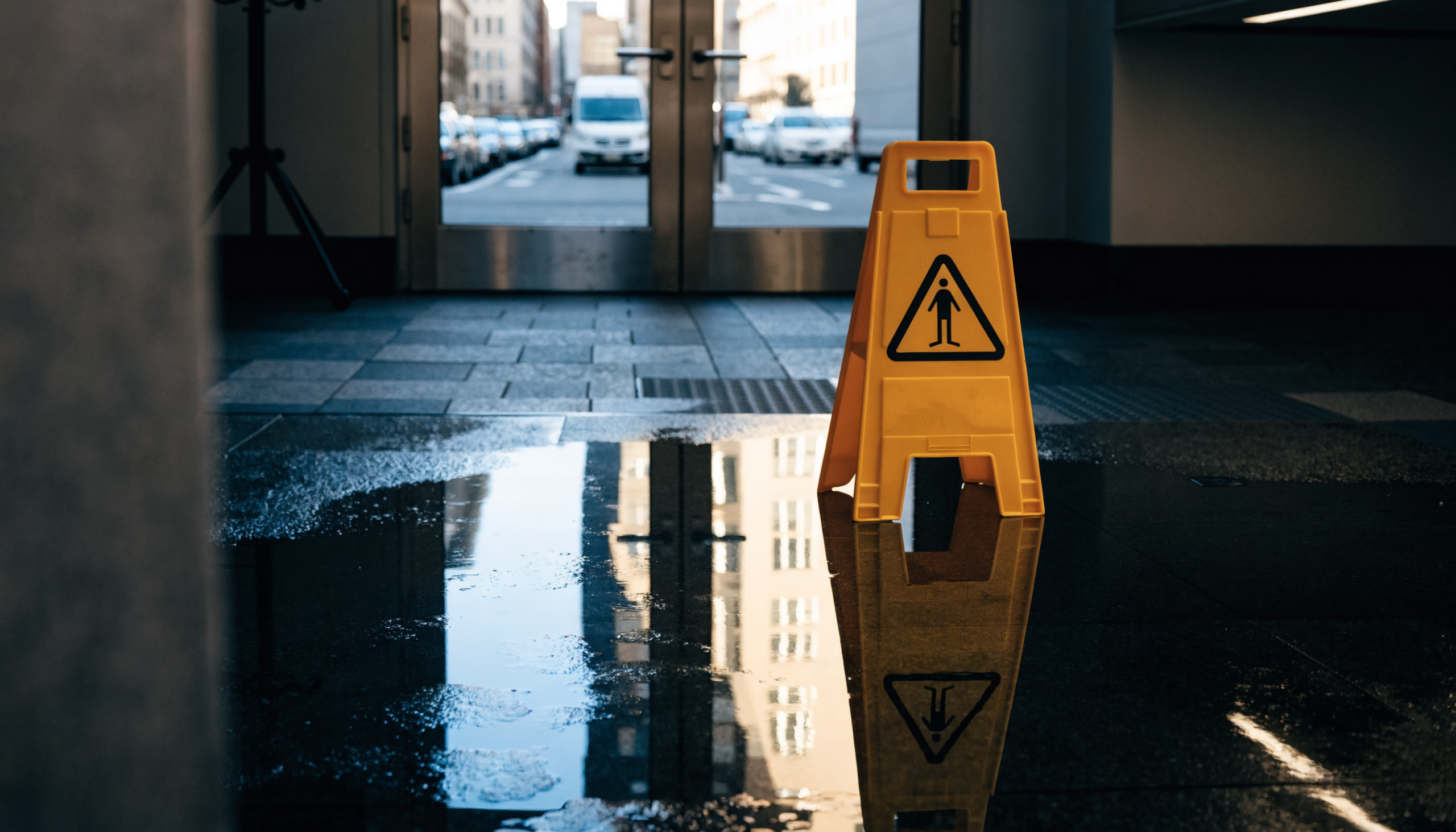
Time is everything, so the evidence is about time. A dark, dirty, footprint-marked puddle suggests the spill was old. A grimy banana peel or a half-dried liquid points the same way. Fresh, clean, and clear points the other way, and the defense will say no one could have caught it.
The strongest proof is not your memory. It is surveillance video, a store’s inspection or sweep log, incident reports, and witnesses who saw the condition earlier. Our NYC slip and fall lawyers send preservation demands for that footage immediately, because many systems overwrite within 30 days.
Who is liable for a fall on a NYC sidewalk?
This surprises people. For most New York City sidewalks, the City is not the responsible party. Administrative Code §7-210 shifts the duty to maintain the sidewalk, and the liability for failing to, onto the owner of the abutting property.
The main exception is an owner-occupied one-, two-, or three-family home used only as a residence, where the City can remain responsible. Knowing which rule applies decides who you sue and under what deadline, a distinction our NYC premises liability lawyers sort out at the start of every sidewalk case.
What about snow and ice?
New York’s “storm in progress” doctrine gives property owners a break during active weather. An owner is not required to clear snow or ice while a storm is still falling, and for a reasonable time after it ends. Suing over a fall that happened mid-storm usually fails on that rule alone.
Timing and weather records decide these cases. Certified data showing when the storm actually stopped, matched against when you fell, is often the difference. An icy patch that survived two clear, sunny days is a very different claim from one during a nor’easter.
What does this mean for your slip and fall claim?
Because notice turns on time, the window to gather proof is short. Photograph the hazard the day it happens, get names of witnesses, and report the fall in writing so there is a record. Then the fight becomes whether the owner had a fair chance to fix the condition, not whether you really fell.
The clock is also unforgiving against public defendants. A fall on City property requires a notice of claim within 90 days under General Municipal Law §50-e, long before the three-year deadline in CPLR §214. If comparative fault comes up, remember New York reduces but never eliminates recovery under CPLR §1411.
Fell on Someone Else’s Property in New York?
The proof that wins a slip and fall case disappears quickly, so the sooner the footage and logs are preserved, the better. The NYC slip and fall lawyers at Keith D. Silverstein & Associates have recovered millions for injured New Yorkers. Call 212-385-1444 for a free consultation.
Keith D. Silverstein · Admitted to the New York Bar, 1987 · Read Keith’s bio
Published September 30, 2026 · Last reviewed October 2026
This article is general information about New York law, not legal advice, and does not create an attorney-client relationship. Every case is different. Attorney Advertising.