New York’s Labor Law 240, known as the Scaffold Law, is one of the most powerful legal protections for workers in the entire country. If you were injured in a gravity-related accident on a New York construction site, this law could mean the difference between a modest workers’ compensation payment and a full civil recovery worth far more.
Here’s what it says, who it covers, and why it matters for your case.
What Is Labor Law 240?
Enacted in 1885 and reinforced through decades of litigation, New York Labor Law Section 240 places absolute liability on property owners and general contractors for gravity-related construction accidents. If you fall from a scaffold, ladder, roof, or elevated surface, or if an object falls and strikes you while you work below, the owner and general contractor are liable. Period.
There is no comparative negligence defense under this law. They cannot blame you for the accident. They cannot argue that you were careless. The law deliberately puts the burden of safety on the parties with the resources and authority to control the worksite.
What Accidents Does It Cover?
Labor Law 240 applies to:
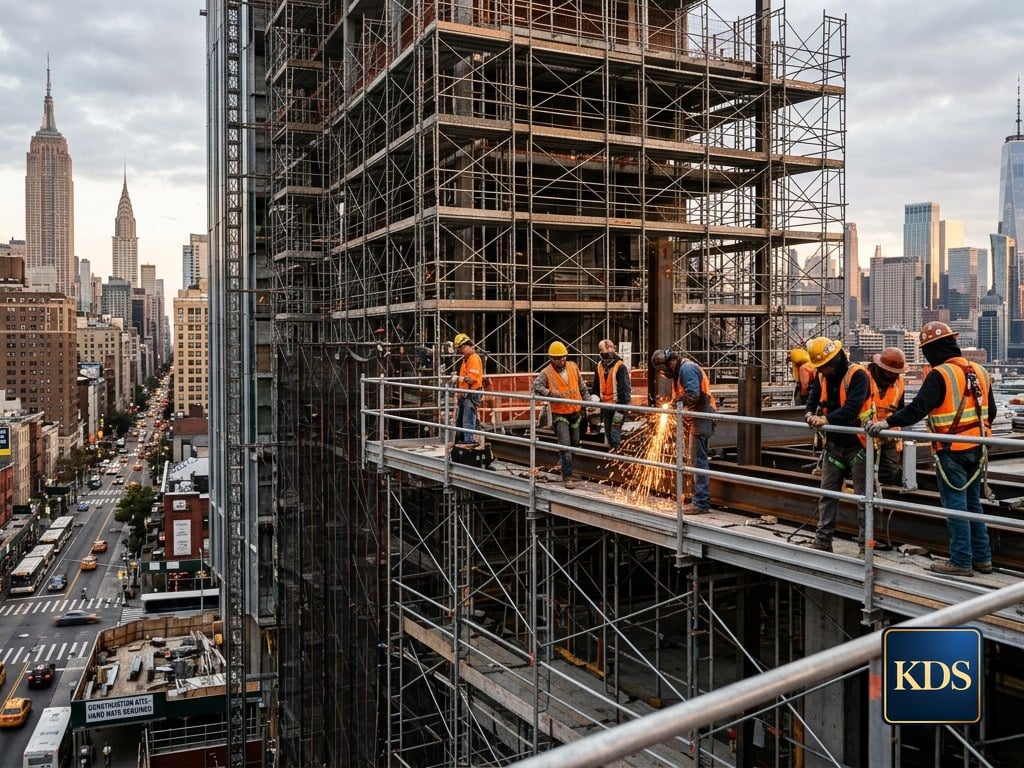
Falls from scaffolds, ladders, roofs, and elevated platforms
Being struck by falling tools, equipment, or construction materials
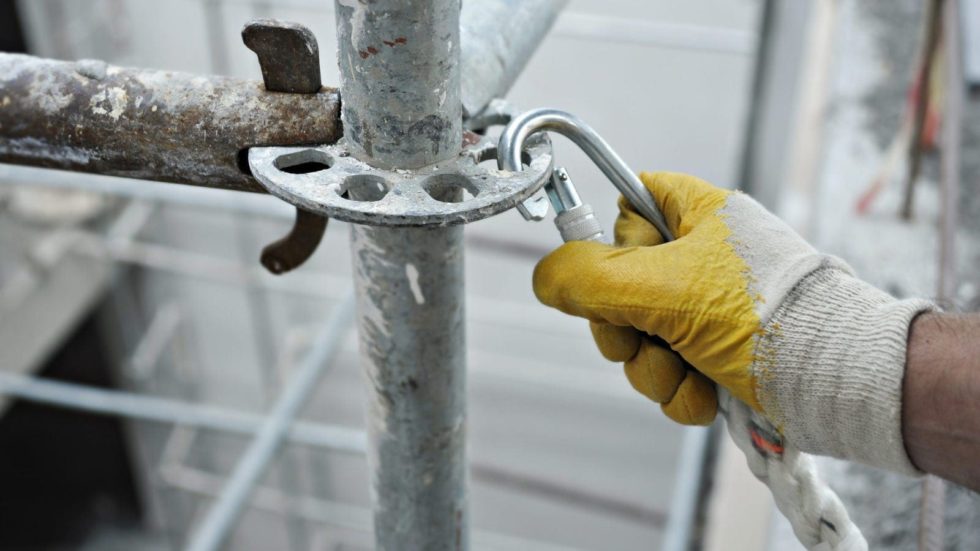
Collapses of improperly rigged or assembled scaffolding
Falls into unguarded floor openings, elevator shafts, or excavations
Equipment failures involving hoists, derricks, or lifting devices
What It Does Not Cover
This law applies specifically to gravity-related hazards during construction, demolition, repair, or cleaning of a structure. Ground-level slip and fall accidents or injuries from equipment malfunctions unrelated to elevation changes typically fall under Labor Law 241 or Labor Law 200 instead, each with different standards of proof.
Who Is Protected?
Any worker on a qualifying construction project. That includes laborers, carpenters, ironworkers, electricians, plumbers, painters, and anyone else performing construction, renovation, demolition, or repair work on a building or structure in New York State.
Who Is Liable?
Property owners and general contractors are the primary defendants under Labor Law 240. This is critical: even if you were employed by a subcontractor, you can bring a direct lawsuit against the property owner. Landlords, project developers, and construction managers have all been held liable under this law regardless of whether they were present on the job site.
How This Plays Out in Court
Cases under Labor Law 240 routinely involve significant damages. Defense teams aggressively challenge every aspect of these claims. They argue the worker was the sole proximate cause of the accident. They contest whether the work qualified under the statute. They challenge witness testimony and fight over technical definitions.
Keith Silverstein spent 25 years making exactly those arguments from the insurance defense side. He knows which challenges hold up and which ones fall apart, and he knows how to shut them down before they gain traction.
Do You Have a Case?
If you were injured in a gravity-related accident on a New York construction site, you likely have a strong claim under Labor Law 240. These cases are time-sensitive. Evidence disappears. Scaffolding gets disassembled. Witnesses move to other job sites. The sooner you contact an attorney, the stronger your position.
Contact Us Today. Free Consultation. No Fees Unless We Win.
Call 212-385-1444.
Don’t Settle for Less.